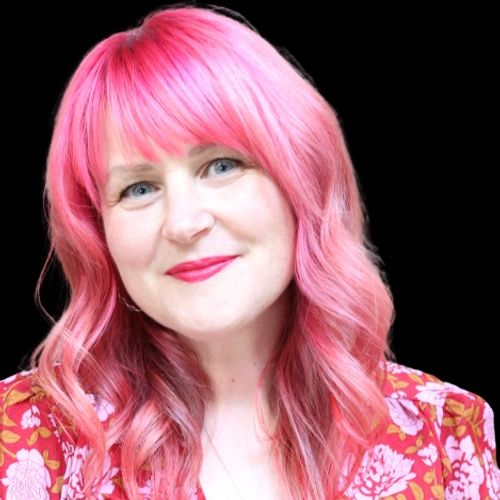
261. Why We Defend Ourselves (Even When We Know We’re Wrong)
Today Sarah explores why we get defensive even when we know we're wrong!
Coaching with Sarah - All details HERE
Book a call to see if coaching is for you HERE
Join my email club HERE
Buy the best-selling book Drink Less; Live Better HERE or order from anywhere you usually buy your books.
Subscribe to my 5 day Drink Less Email Series HERE
Download my Habit Tracker HERE
Did you know I've HIDDEN a podcast episode?
It's your secret weapon at 5pm if you are feeling cravings for alcohol.
You can listen HERE
BTW - If you didn't already know, I'm Sarah - Drink Less; Live Better founder, best-selling author, expert speaker, life coach and, as you already know, podcast host!
We don't have to hit rock bottom, we're allowed to want something different and we can CHOOSE to improve our lives from this point onwards.
I work in the magic space where doubt, hope and action meet... oh.... and
PS I believe in you!
Let's get connected;
on Facebook
on insta
Check out Drink Less; Live Better for blog posts and more
Subscribe to this podcast so you don't miss an episode - also please do leave a like or review and share the love! Thank you
Found the podcast useful? I'd love to have a coffee with you - you can buy it HERE
THANK YOU!
Transcript
Hello and welcome to this episode of the Drink Less, Live Better podcast. I'm your host, Sarah Williamson, and I'm glad you're here today. Okay, one of our protective strategies: we're going to talk about defensiveness today. We have a deep-seated instinct to explain, justify, push back, even when a small, quiet part of us knows that we might just be wrong. Someone points something out, maybe gently, maybe not, and before you've even fully processed what they've said, your mind is already building a defense case, gathering evidence to justify your standpoint. Why do we do that? Why? Why do we defend ourselves when the truth is knocking politely at the door? Let's start here.
::At the heart of defensiveness will always be ego protection. Ego often gets a bad reputation, but it's not inherently negative. Your ego is essential. Your sense of self, it's the story you tell about who you are. I'm a good person. I make sensible choices. I'm in control. When something challenges that identity, even in a small way, it can feel less like feedback and more like a threat. If someone suggests that your behaviour doesn't line up with who you believe yourself to be, your brain doesn't calmly say, "Oh, how very interesting. Let's explore that." Nope. It says, "Incoming threat. Protect the identity at all costs." And so, of course, defensiveness kicks in. It's fast. It's automatic. And it isn't necessarily logical.
::Underneath ego protection sits something else, and that's emotional security. We all want to feel safe in ourselves, safe in how we're seen, safe in how we're heard, safe in our place in the world. Admitting fault or wrongness can feel like stepping out onto thin ice. Suddenly, there's exposure, vulnerability, the risk of judgment, rejection, or shame. And your brain hates that risk, so it builds a shield, and defensiveness is the shield. It might sound like this, "Well, it's not that bad, really. I've had a stressful week. Other people do it too. I deserve this." Fill in the blank with your own version. And it's not that we're trying to be dishonest. It's that we're trying to stay safe.
::However, the very thing that feels like protection often keeps us stuck. Because if we can't acknowledge what's true, we can't change it. And this shows up so clearly when it comes to alcohol. How many times have you defended your drinking? For me, I know it was a lot. I'd say, "It helps me relax. I'm not as bad as other people. I can choose to stop whenever I want. This is just what everybody does." And I said all of that even when another part of me knew it wasn't really helping. It was affecting my sleep, my mood, my energy, and my confidence. And yet, the defense came in anyway.
::Why? Why, why? Because admitting that alcohol isn't serving you can feel like more than just changing a habit. It can feel like losing a coping mechanism. It can feel like facing emotions you've been avoiding. It can even feel like questioning your whole identity. Who am I without this? How will I unwind? What will other people think? And your brain steps in, wraps it all in a neat, convincing argument, and hands them back to you as truth. But they're not the truth. They're protection strategies.
::Defensiveness isn't a human flaw. It's a signal. It's your mind saying, "Something here feels unsafe, feels wobbly, not like me." And instead of fighting that, we could perhaps just get interested in it. The next time you notice yourself getting defensive, instead of doubling down, try pausing, just for a moment, and asking yourself, "What am I trying to protect right now? What feels uncomfortable about this? Is there a small part of this that might be true?" Not all of it. You don't have to agree with everything. But if there is a thread of truth, you can acknowledge a behaviour without attacking your whole identity. You could say, "The thing I just did doesn't align with who I want to be," without making it mean I am a bad person.
::You get to decide whether your defences are serving you. You get to acknowledge where you've been wrong, if you want to, or you get to decide if you weren't quite as right as you wanted to be. It's your choice, my friend.
::You can find me on Instagram at drinkless, live better, and online at drinkless, live better.com, where you'll find lots of supportive resources. Check today's podcast show notes for a link to a hidden episode that will help with 5:00 PM cravings and details about my one-to-one life coaching and sober coaching programmes. And PS, I believe in you.